
_edited_e.jpg)
How to Raise a Confident Child: Practical Tips for Parents


Confidence is one of the most important foundations of a child’s overall development. It influences academic performance, communication skills, friendships, emotional well-being, and future success. A confident child is more likely to participate in class, try new experiences, express their thoughts, and approach challenges with a positive mindset.
Many parents worry about a shy child, fear of failure, or hesitation in class participation. The good news is that confidence is not an inborn trait—it can be developed through positive parenting, supportive school environments, and everyday experiences.
What Does Confidence in Children Really Mean?

Confidence is not about arrogance, perfection, or always being the best. It is a healthy belief in one’s abilities and potential. A confident child typically demonstrates:
Ability to express thoughts and opinions openly.
Willingness to try new things without excessive fear.
Resilience after failure and the ability to learn from mistakes.
Independence in decision-making and taking responsibility.
Positive self-image and belief in their strengths.
Every child develops confidence differently. Some express it openly, while others build it gradually through encouragement and positive experiences.
Signs Your Child May Lack Confidence
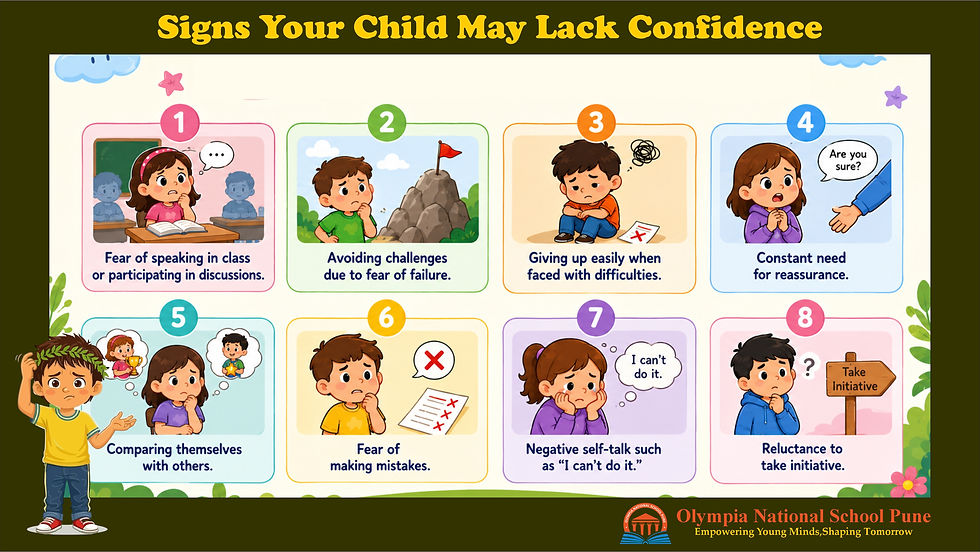
Occasional self-doubt is normal, but persistent signs of low confidence may require attention. Common indicators include:
Fear of speaking in class or participating in discussions.
Avoiding challenges due to fear of failure.
Giving up easily when faced with difficulties.
Constant need for reassurance.
Comparing themselves with others.
Fear of making mistakes.
Negative self-talk such as “I can’t do it.”
Reluctance to take initiative.
Recognizing these signs early can help parents provide the support children need to build confidence.
Practical Tips to Raise a Confident Child

1. Encourage Effort, Not Just Results
Praise hard work, perseverance, and improvement rather than focusing only on marks or achievements. Children who value effort are more willing to take on challenges and learn from mistakes.
2. Allow Children to Make Small Decisions
Let children make age-appropriate choices, such as selecting books, clothes, or activities. This builds independence, responsibility, and trust in their own judgment.
3. Avoid Constant Comparison
Every child learns and grows at their own pace. Comparing children with siblings or peers can damage self-esteem. Instead, focus on their individual progress and achievements.
4. Teach Children to Handle Failure Positively
Help children understand that mistakes are a natural part of learning. Encourage them to view setbacks as opportunities for growth and share stories of successful people who overcame challenges.
5. Encourage Communication and Expression
Listen without judgment and encourage children to share their thoughts, feelings, and opinions. When children feel heard, they become more confident communicators.
6. Give Age-Appropriate Responsibilities
Assign simple household chores or school-related responsibilities. Successfully completing tasks gives children a sense of accomplishment and self-belief.
7. Support Their Interests and Talents
Encourage participation in sports, arts, music, public speaking, and STEM activities. Exploring their interests helps children discover their strengths and develop confidence.
8. Be a Positive Role Model
Children learn by observing adults. Demonstrate positive self-talk, resilience, and confidence in your own actions to inspire similar behaviours.
9. Create a Safe and Encouraging Environment
Children thrive when they feel respected, valued, and emotionally secure. Regular encouragement and constructive feedback help them develop a strong sense of self-worth.
Role of Schools in Building Confidence

Schools play a crucial role in helping children build confidence through:
Supportive Teachers who encourage participation and celebrate effort.
Co-Curricular Activities that help children discover their talents.
Public Speaking Opportunities that improve communication skills.
Teamwork and Leadership Experiences that develop responsibility and decision-making.
Safe Learning Environments where children feel comfortable expressing themselves.
At Olympia National School Pune, we believe confidence grows when children are encouraged to explore, participate, and express themselves freely. Our holistic approach to education focuses on both academic excellence and personal development.
Common Mistakes Parents Should Avoid
While trying to help their children succeed, parents should avoid:
Overprotection, which limits resilience and independence.
Excessive criticism, which can damage self-belief.
Comparing siblings or peers, which reduces self-esteem.
Solving every problem for the child, preventing them from developing problem-solving skills.
Unrealistic expectations, which can create fear of failure.
By focusing on encouragement, patience, and guidance, parents can create an environment where confidence grows naturally.
Confidence develops gradually through encouragement, positive experiences, and consistent support from parents and educators. Every child has unique strengths and talents that deserve recognition and nurturing.
When parents and schools work together, children feel safe to explore, make mistakes, and learn from them. Small daily actions—encouraging effort, listening attentively, and celebrating progress—can have a lasting impact.
A confident child is not one who never fails, but one who believes they can learn, grow, and try again. With the right guidance and support, every child can develop the confidence needed to thrive in school and in life.

Comments