
_edited_e.jpg)
10 Healthy Habits Every School Child Must Learn Early in Life

Updated: Jul 31

As parents of school-going children, the habits you nurture at home play a crucial role in shaping your child’s overall development. Healthy habits for school children not only influence daily behaviour but also build personality over time, making the early years essential for strong foundations.
Simple practices like eating nutritious meals, maintaining personal hygiene, staying physically active, and following a consistent routine support your child’s physical, emotional, and social growth. These daily habits for kids also improve focus, discipline, and overall well-being.
Good habits act as stepping stones to your child’s success. They encourage independence, build responsibility, and help children stay motivated—enabling them to lead a balanced life where learning, play, and rest go hand in hand.
Why Healthy Habits Matter for School Children

As a parent, helping your child develop healthy habits can significantly impact their growth and academic journey:
Support Physical Health: Builds immunity, energy, and overall development
Improve Focus and Memory: Enhances concentration and learning ability
Boost Academic Performance: Leads to better participation and results in school
Build Discipline and Responsibility: Encourages structured routines and time management
Promote Independence: Helps children become confident and self-reliant
Develop Lifelong Skills: Prepares children for long-term success
10 Healthy Habits Every School Child Must Learn
1. Eating a Balanced Diet
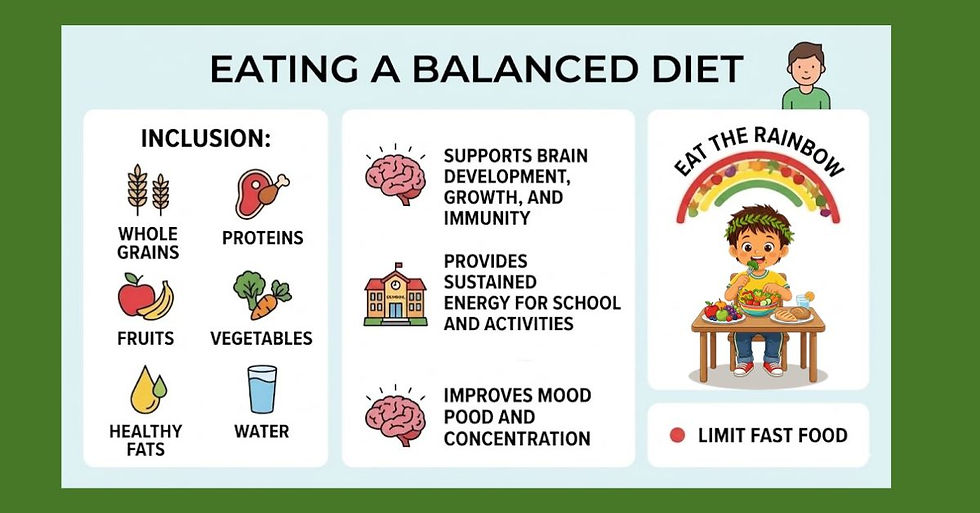
Supports brain development, growth, and immunity
Provides sustained energy for school and activities
Improves mood and concentration
Limit fast food; encourage variety (“eat the rainbow”)
Include: Whole grains, proteins, fruits, vegetables, healthy fats, and water
2. Staying Physically Active

Builds strength, stamina, and heart health
Improves focus and academic performance
Reduces stress and boosts mood
Encourages teamwork and confidence
Tip for parents: Ensure at least 60 minutes of daily physical activity
3. Maintaining Personal Hygiene
Prevents infections and illness
Builds confidence and social comfort
Encourages responsibility
Teach your child:
Brush twice daily
Wash hands regularly
Bathe and wear clean clothes
4. Getting Enough Sleep
Improves memory, focus, and learning
Supports emotional balance and immunity
Recommended sleep:
9–11 hours (younger children)
8–10 hours (teens)
Parent tip: Maintain a fixed sleep routine and limit screen time before bed
5. Limiting Screen Time
Improves concentration and reduces distractions
Prevents eye strain and sedentary habits
Supports better sleep and mental health
Guidelines for parents:
Limit to 1–2 hours daily
Encourage offline activities
Create screen-free zones
3-6-9-12 Rule (Serge Tisseron):
No screens before age 3, no personal devices before age 6, no unsupervised internet before age 9, no social media before age 12
6. Staying Hydrated
Improves concentration and memory
Prevents fatigue and headaches
Supports digestion and overall health
Tip: Encourage your child to carry a water bottle and drink regularly
7. Developing a Reading Habit

Improves language and comprehension
Builds focus and critical thinking
Enhances creativity and empathy
Reduces stress
Tip for parents: Encourage 15–20 minutes of daily reading
8. Practising Time Management
Helps complete homework on time
Reduces stress and improves organisation
Builds discipline and responsibility
9. Being Kind, Respectful, and Responsible
Builds strong relationships and teamwork
Creates a positive learning environment
Encourages empathy, gratitude, and accountability
10. Managing Stress and Emotions
Improves focus and academic performance
Builds confidence and resilience
Supports mental well-being
Tip: Encourage open communication, deep breathing, and positive thinking
Role of Parents and Schools
Building healthy habits for children is most effective when parents and schools work together:
Parents: Create routines and model good behaviour at home
Schools: Reinforce habits through structure and daily practices
Environment: Activities promote discipline, teamwork, and responsibility
Positive Reinforcement: Encouragement builds confidence
At Olympia National School Pune, we focus on holistic development—balancing academics with essential life skills.
Practical Tips to Build Healthy Habits in Children

Start small and stay consistent
Lead by example
Create simple daily routines
Use positive reinforcement
Keep expectations realistic
Avoid over-discipline
Make habits fun and engaging
Conclusion
Healthy habits for school children begin at home and are strengthened through school support. As a parent, your guidance plays a key role in shaping your child’s behaviour, mindset, and future. By encouraging these habits early, you help your child grow into a disciplined, confident, and balanced individual—ready to succeed in school and life.


Comments